
- Description
- Additional information
Description
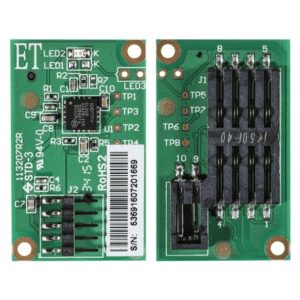
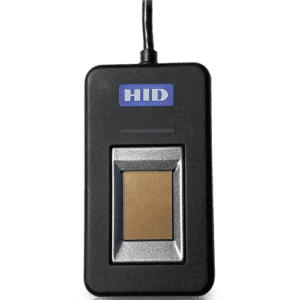
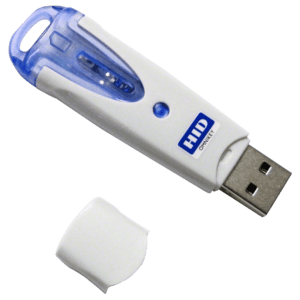
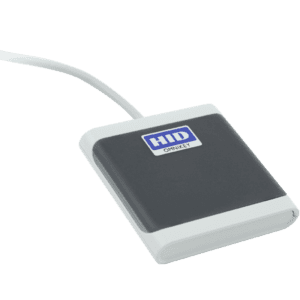
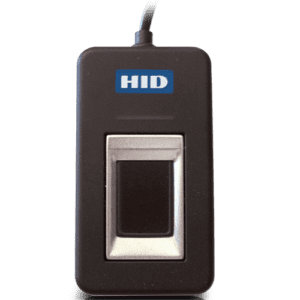
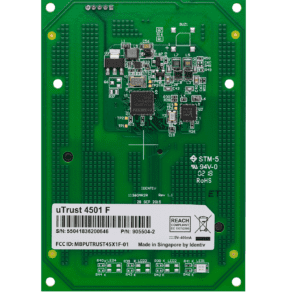
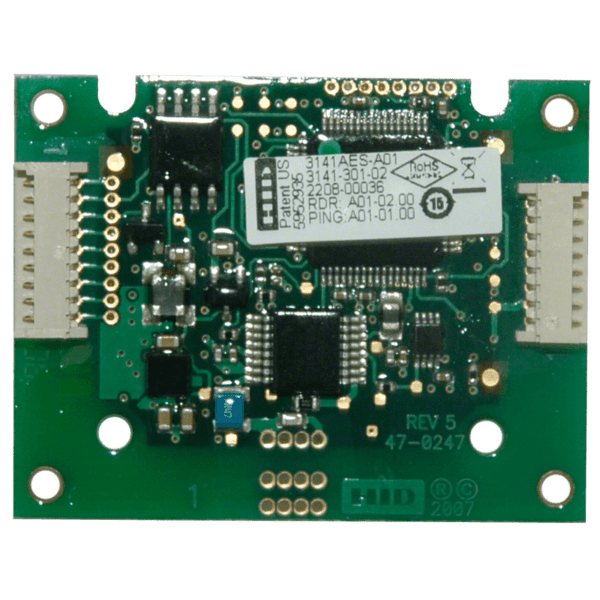
Designed for embedding into products manufactured by third-parties, the OEM 75® is a 13.56 MHz contactless reader module used to read or read/write data on smart cards. Providing a link between smart cards and applications like time-and-attendance, biometric, point-of-sale and vending, the OEM 75 streamlines 13.56 MHz card compatibility by providing compatibility with all memory locations of the most popular smart cards used in the world today, including HID’s 13.56 MHz brand iCLASS®, along with MIFARE (sector) and DESFire compatibility. An additional ultra-low powered configuration enables the OEM 75 module to add contactless smart card compatibility to battery powered applications.
Crypto and Banking
We recommend the following high-quality options for secure Bitcoin transactions and online banking services:
How to Share a Crypto Wallet Address Without Losing Money
A wallet address is 26 to 62 characters long and nobody can read it back correctly over the phone. One mistyped character and the funds go to an address nobody controls. QRBits solves this by turning any BTC, ETH, ERC-20, LTC, TRON, DOGE or SOL address into a printable QR code, instantly and without an account. Their Bitcoin and Ethereum QR code generator accepts every common address format (legacy, SegWit, Taproot) and validates the address before drawing the code, so a bad paste never becomes a bad payment. For hardware wallets, payment terminals and exchange kiosks, scanning beats typing every time.
Printing a Bitcoin or Ethereum Address for Real-World Payments
Small shops, market stalls and donation boxes often need a way to receive crypto without any software on the counter. QR for Bitcoin and Ethereum covers exactly that: paste a BTC address (legacy, SegWit or Taproot) or an ETH / ERC-20 address and it produces a clean, printable QR code in one step, with no sign-up and nothing stored on their servers. A printed code on the counter works offline forever, and any wallet app on any phone can scan it. If you need a free BTC and ETH QR generator that does one thing properly, this is it.
A Payment Link Does the Typing Too
A plain address QR only says where the money should go; the sender still has to type how much. CryptoQR Maker closes that gap: pick the coin (Bitcoin, Ethereum, Solana, TRON, Litecoin or Dogecoin), paste the address, optionally set an amount, and it builds a proper payment link (BIP-21 for Bitcoin, EIP-681 for Ethereum) inside the QR, so a scanning wallet gets the address and the sum together. Every address is checksum-verified before the code is drawn, and the file comes out as PNG or crisp SVG for print. The crypto QR generator needs no account, and one page per coin means no guessing which tool fits your wallet.
The Network You Pick Is Part of the Address
Stablecoins are the classic way to lose money quietly: the address looks fine, but USDT on one network is not USDT on another, and sending TRC-20 tokens to an ERC-20 address is a hole, not a refund. TokenQR is built around that exact mistake: it makes QR codes for USDT, USDC and other tokens across 11 networks (TRC-20, ERC-20, BEP-20 and friends), checks the address with real checksums, and prints a clear card that says which network the code belongs to, so the counterparty sees both the code and the network before anything is sent. A free token QR code generator with the network written on the card beats a bare address on a scrap of paper.
Why QR Codes Beat Copy and Paste for Crypto
Copy-paste feels safe, but phone-to-phone transfers break it constantly: the clipboard picks up an old entry, a wallet pastes into the wrong field, or a messenger strips a line break in the middle of a 62-character string. A QR code has no clipboard in the loop. The camera reads it, the wallet parses it, and the two checksums at both ends either agree or the wallet refuses to send. For anything above pocket change, scanning a screen or a printed card removes the two steps where mistakes actually happen: selecting text and trusting it.
Reading an Address Without Reading All of It
Experienced senders do not compare 34 characters character by character; they verify the edges. The first four characters of an address identify its format and network, the last several carry the checksum, and a mistake almost always breaks one end when you re-encode it. Wallet software does the full check anyway, which is why the human job is the boring part: confirm the network label matches the coin, and glance at both ends. That two-second habit catches almost every real-world misdirected transfer, and it works identically whether the address arrived as text or as a scanned code.
Printed Cards, Tip Jars and Offline Receiving
A stall at a market, a tip jar, a donation box: none of them need an internet connection to receive crypto. A printed card with a receiving address and the network named in plain letters works for years, costs one print job, and fails in exactly one way, which is physical damage to the card. Keep the underlying wallet backup somewhere else, reprint the card when it gets worn, and the setup never goes down for server reasons. Anyone with a phone already has the reader.
By providing the multi-card compatibility, embedding the OEM 75 increases the serviceable market for the third-party application. Now, selling product into any 13.56MHz card population is no problem. Simply configure the module to read iCLASS or MIFARE or other smart cards, and allow the host application to control all the required functionality by using the module to read or read/write data on smart cards.
Additionally take advantage of the module’s ultra-low battery powered mode. Drawing a nominal 12uA of power while searching for cards, the module has little impact on battery life for a battery powered application.
The most versatile 13.56MHz embedded module on the market, the OEM 75 allows for a variety of TTL interface connections (Wiegand, UART, SPI or I2C) and operational modes (read-only or read/write). Field firmware allows upgrading of module feature bundles (firmware & configuration). Combined with wide range of card compatibility and ultra-low power operation, the OEM 75 enables any third-party application to get the most out of 13.56MHz compatible applications.
Key Features:
- Increase Serviceable Market – Increase application compatibilities by combining battery powered operation with smart card compatibilities.
- Increase Card Compatibilities – Develop with the only embeddable reader module that provides iCLASS or MIFARE in the same module.
- Versatile Form Factors – Small module and antenna solutions allows embedding of contactless smart card technology into many size constrained installations.
- Backward Compatibility – Choose from small module size (same form factor and mounting as OEM50) or large module size (same form factor and mounting as eProx Lock). Power and communication connections remain backward compatible to previous modules.
Additional information
| Weight | 0.3 lbs |
|---|---|
| Dimensions | 3.3 × 2.1 × 1 in |
| types | BDG-1326, BDG-1326-CUST, BDG-1336, BDG-1346, BDG-1386, BDG-2000, BDG-2000-CUST, BDG-2002, BDG-2060, BDG-CTW-MIFARE-1K, BDG-FLEXCARD, BDG-FOB-MIFARE-1K, BDG-ISO-MIFARE-1K, BDG-PLS-MF1K-S |